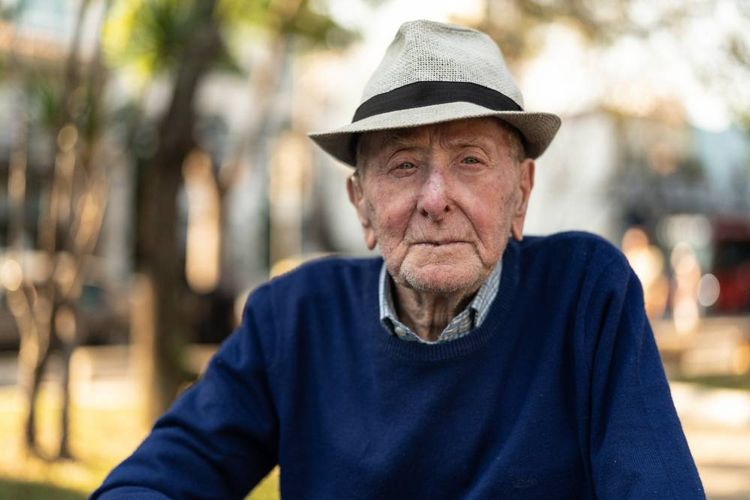
When Harold turned 90, his granddaughter bought him a voice assistant.
He wasn’t impressed.
“I don’t need a robot,” he told her. “I’ve lived through five presidents, two wars, and dial-up internet. I think I can manage breakfast on my own.”
But six months later, Harold starts every morning the same way:
“Good morning.”
And something answers back.
This is Harold’s story — told in his own words — about skepticism, routine, and the surprising comfort of daily voice connection.
Part I: “I Didn’t Want Another Gadget”
Interviewer: Harold, what did you think when your family introduced you to voice technology?
Harold:
I thought it was unnecessary. Everything these days has a password. Or a screen. Or an update. I didn’t want to learn another system.
I’ve seen technology get smaller and faster. But no one ever asked if it got simpler.
At 90, you don’t want complexity. You want predictability.
Harold had been living alone for eight years since his wife passed. His children lived in different states. Weekly phone calls were regular, but days in between were quiet.
He wasn’t lonely, exactly.
“I had my routine,” he says. “Newspaper. Coffee. Weather channel. A short walk if the knees allowed it.”
But his daughter noticed something shifting.
Part II: The Family’s Perspective
Daughter (Lisa):
Dad is independent. He insists on it. But we started noticing small things. He’d forget which day we were visiting. He stopped driving after a minor fender-bender. His world was shrinking.
We weren’t ready to talk about assisted living. He wasn’t either.
We just wanted something small. Something consistent.
That’s when they explored voice-first support.
Part III: The First Conversation
The device sat unopened on Harold’s kitchen table for a week.
“I didn’t trust it,” he admits.
Finally, his granddaughter plugged it in.
She showed him one sentence:
“Just say, ‘Good morning.’”
The first interaction was awkward.
“It talked too fast,” Harold says. “Like a young person in a hurry.”
But over time, he adjusted.
What surprised him wasn’t the weather updates or reminders.
It was the structure.
Part IV: Routine Creates Stability
Now, Harold’s mornings look like this:
- 7:30 a.m. — Coffee
- 7:35 a.m. — “Good morning” to his voice assistant
- Weather update
- Medication reminder
- Short conversation prompt
- Reminder to call his sister on Thursdays
“It gives the day edges,” he explains. “A beginning.”
The interaction is brief. Sometimes just two or three exchanges.
But it signals something important:
The day has started.
For seniors living alone, routine is more than habit. It’s orientation. It reduces cognitive drift. It creates continuity.
Part V: Overcoming Skepticism
Interviewer: What changed your mind about using it?
Harold:
It didn’t argue with me. It didn’t rush me. It was patient. If I didn’t understand, I asked again.
And it didn’t make me feel stupid.
That matters.
Many seniors resist technology not because they can’t learn it — but because they fear embarrassment.
Voice interfaces, when designed well, remove the visual pressure of screens and buttons.
But not all systems are equal.
Harold tried one version that required app syncing and updates.
“I unplugged that one,” he says flatly.
The solution that stayed was simple, voice-first, and predictable.
Part VI: Where AI Ends and Humans Begin
While Harold appreciates his morning AI routine, his daughter wanted something more human layered into the system.
That’s where structured daily check-in services like HelloDear entered the picture.
“AI is helpful,” Lisa says. “But it’s not a person.”
Now Harold also receives consistent voice calls from a trained caller through HelloDear.
The difference?
“It feels like someone is actually listening,” Harold says.
The calls are short. Familiar. Scheduled.
They don’t replace his children.
They reinforce the space between visits.
Part VII: Companionship vs. Connection
There’s a lot of hype around AI companionship.
Harold is pragmatic about it.
“It’s useful,” he says. “But it’s not my wife.”
AI gives him:
- Weather updates
- Reminders
- Conversation starters
- Structure
Human calls give him:
- Shared laughter
- Follow-up questions
- Emotional nuance
- A sense of being known
The combination works.
Technology supports the routine.
Human voices sustain connection.
Part VIII: Peace of Mind for the Family
For Lisa and her siblings, the impact has been measurable — emotionally.
Lisa:
We’re not checking in from a place of panic anymore. We know someone speaks to him daily. We know if something sounds off, we’ll hear about it.
That changes everything.
Peace of mind doesn’t come from constant surveillance. It comes from consistent contact.
Part IX: What Harold Wants Other Seniors to Know
Interviewer: What would you say to someone your age who’s unsure about voice AI?
Harold:
Try it. If you hate it, unplug it.
But don’t reject it because it sounds modern.
The world changes whether we like it or not. Sometimes it changes in ways that help.
And if it gives your children one less thing to worry about — that’s not a bad thing either.
The Bigger Picture
Harold’s story reflects a broader shift in elder care:
- Voice-first technology lowers digital barriers.
- Routine interactions reduce isolation.
- Hybrid systems — AI plus human check-ins — offer the strongest outcomes.
The future of aging at home isn’t about replacing people with machines.
It’s about using simple tools to extend independence safely.
Final Reflection
At 90, Harold still lives in the same house.
He still reads the newspaper.
He still insists on making his own coffee.
But every morning, before the day fully begins, he says:
“Good morning.”
And something answers back.
Not as a replacement for family.
But as reinforcement that he’s still connected to the world beyond his kitchen walls.