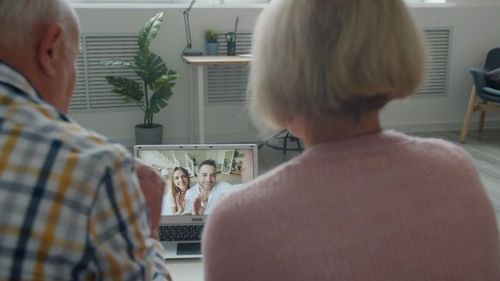
How Families Can Stay Close When Distance Gets in the Way
Long-distance caregiving doesn’t have to feel overwhelming. Explore emotional and practical strategies that help families stay connected and provide better care from afar.
5 min de leitura
Long-distance caregiving doesn’t have to feel overwhelming. Explore emotional and practical strategies that help families stay connected and provide better care from afar.
Caring for an older family member is never simple — and when distance enters the picture, it becomes even more complex. Today, millions of families support parents, grandparents, or relatives from another city, another country, or another continent.
Phone calls, video chats, and occasional visits help — but they don’t always answer the most important question:
“How are they really doing day to day?”
Long-distance caregiving is filled with love, but also uncertainty, guilt, and emotional strain. Families want to stay close, informed, and supportive — even when life makes daily contact difficult.
The good news? Distance doesn’t have to mean disconnection. With the right emotional and practical tools, families can stay meaningfully close — and offer better care from afar.
Long-distance caregiving happens for many reasons:
While physical distance may be unavoidable, emotional distance doesn’t have to be.
Still, families often experience:
These emotional burdens are common — and valid.
Long-distance caregivers often live with a quiet, ongoing worry:
Even frequent phone calls don’t always provide clarity. Older adults may not want to worry their families, may minimize issues, or may simply forget details. Short conversations can miss subtle changes that matter.
This emotional load builds over time — and without consistent support, it can lead to burnout, anxiety, and a sense of helplessness.
Staying close isn’t just about information — it’s about emotional connection and reassurance.
A short, regular check-in can be more powerful than long, sporadic conversations. Consistency builds routine and trust — and helps families notice patterns over time.
When families worry, calls can unintentionally feel like checklists: “Did you sleep?” “Did you eat?” “Did you take your medication?”
This can feel exhausting or intrusive for older adults. Gentle, conversational check-ins often lead to more honest and natural sharing.
Knowing that someone is checking in regularly — even when you can’t — eases emotional strain. Families don’t have to carry all responsibility alone.
Emotional closeness needs practical structure to support it.
Daily or near-daily check-ins help replace uncertainty with rhythm. When communication is reliable, families stop worrying about what they don’t know.
Families don’t need complex dashboards. They need clarity:
Simple summaries are often more helpful than raw data.
Small changes over several days matter more than one unusual day. Tools that surface trends help families notice shifts early — without creating alarm.
HelloDear was created specifically to reduce the emotional and practical strain of long-distance caregiving.
HelloDear makes regular phone calls through a familiar phone line. These conversations are warm, respectful, and natural — not rushed or clinical.
For older adults, the experience feels simple and comforting. For families, it means daily touchpoints happen consistently — even when they can’t make every call themselves.
Through conversation, subtle signals around:
are gathered and interpreted as non-clinical wellbeing insights.
No apps. No devices. No effort required from the older adult.
Families receive a friendly weekly summary with:
This helps families feel informed, reassured, and connected — without constant worry or guesswork.
One of the biggest fears families have is becoming overbearing or intrusive — especially from a distance.
HelloDear supports autonomy by:
Older adults stay in control of their lives — while families stay informed and emotionally close.
Long-distance caregiving often comes with guilt: “I should call more.” “I should know more.” “I should be there.”
Consistent support systems help replace guilt with reassurance.
Knowing that your loved one:
can lift a heavy emotional burden from families — allowing calls to feel joyful again, not stressful.
Being physically present is valuable — but meaningful care doesn’t disappear with distance.
With the right emotional mindset and practical tools, families can stay close, informed, and connected — no matter where they live.
Long-distance caregiving works best when connection is consistent, gentle, and human.
HelloDear supports that connection — one conversation at a time.
Discover how HelloDear helps families stay close — even when distance gets in the way. 👉 Learn more about our mission and approach: https://hellodear.ai/blog/who-we-the-hellodear-ai-story