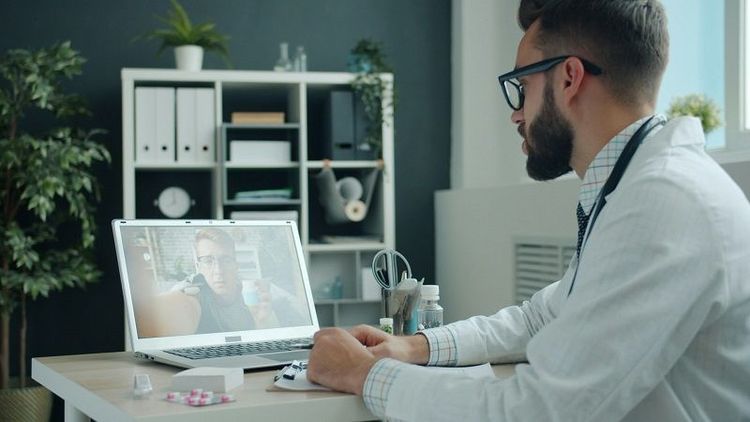
The Digital Divide: Why Telemedicine Is Failing Seniors
Telemedicine promises access but often excludes seniors. Learn why digital healthcare fails older adults and how voice-first, senior-friendly alternatives can help.
5 min de leitura
Telemedicine promises access but often excludes seniors. Learn why digital healthcare fails older adults and how voice-first, senior-friendly alternatives can help.
Telemedicine was meant to make healthcare more accessible. For many older adults, it has done the opposite.
Video calls with doctors, patient portals, health apps, and online forms promise convenience and efficiency. But for millions of seniors, these tools introduce new barriers — technical, cognitive, emotional — that quietly limit access to care.
This isn’t because older adults don’t care about their health. It’s because much of modern telemedicine wasn’t designed with them in mind.
When telemedicine expanded rapidly, especially during the pandemic, the assumption was simple: if healthcare goes digital, everyone benefits.
In reality, many seniors were left behind.
Older adults are more likely to:
These challenges aren’t a lack of intelligence or willingness. They’re a mismatch between human needs and technological expectations.
Healthcare systems often frame this as a “learning gap.” In truth, it’s an accessibility gap.
For telemedicine to work, several things must go right — all at once.
For many seniors, that’s unrealistic.
Telehealth often assumes access to:
Many older adults don’t own these devices — or share them with family members. Others intentionally avoid smartphones because they find them overwhelming or unnecessary.
Even when devices are available, telemedicine platforms often require:
For seniors experiencing mild cognitive decline, anxiety, or sensory changes, this can feel exhausting — or humiliating.
A common but rarely discussed barrier is fear.
Many older adults worry about:
This fear often leads to avoidance — not because they don’t want care, but because the process feels unsafe.
Video calls are frequently treated as the gold standard of telehealth. But for seniors, they introduce unique problems.
Hearing loss, vision changes, and slower processing speeds make video calls harder to follow. Delays, echoes, and poor lighting can quickly turn a medical appointment into a stressful experience.
Not every older adult has:
For those living alone, technical issues can end an appointment before it begins.
Video calls can feel impersonal or rushed — especially when technical difficulties dominate the conversation. Many seniors report feeling less heard, not more, during virtual visits.
Telemedicine should reduce stress. For many older adults, it adds to it.
If screens are the barrier, the solution may be simpler than we think.
Voice-based communication:
Older adults have spent decades communicating by phone. It doesn’t require training, confidence in technology, or constant updates.
Regular voice conversations can offer meaningful, non-clinical insights:
These signals often appear long before a crisis — but only if someone is listening consistently.
Senior-friendly telehealth isn’t about adding more features. It’s about removing friction.
Inclusive healthcare technology should:
This is where “invisible” technology matters — systems that work quietly in the background while seniors engage in natural, human interactions.
Services like HelloDear reflect a different philosophy of care.
Instead of asking seniors to adapt to technology, the technology adapts to them.
This kind of approach doesn’t compete with telemedicine. It fills the gap telemedicine leaves behind.
The future of elder care isn’t more screens — it’s smarter simplicity.
As healthcare systems evolve, the most effective solutions will:
Telemedicine doesn’t fail seniors because they can’t use it. It fails when it forgets who it’s supposed to serve.
Designing for older adults isn’t a niche requirement. It’s a test of whether healthcare technology is truly inclusive.